
Competition is Increasing in the European Market

- Update Time : Sunday, February 22, 2026
- 60 Time View
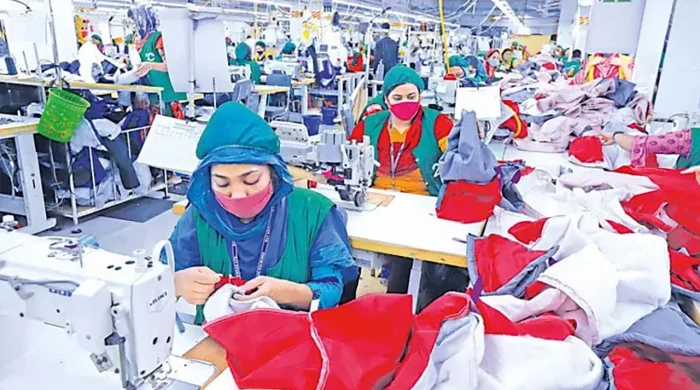
Bangladesh’s ready-made garment sector has held a strong position in the European Union (EU) market for a long time. The solid foundation for Bangladesh’s garment exports there was primarily built after gaining duty-free access to the EU under the Least Developed Country (LDC) facility. However, recent statistics indicate that this position is no longer as comfortable as before.
Although there was growth throughout 2025 in the European Union—the primary market for Bangladesh’s ready-made garments—a major negative trend emerged in the final month of the year, December. According to the latest published Eurostat data, the value of garment imports into the EU in December 2025 decreased by 2.27 percent compared to December 2024. This downturn had a significant impact on Bangladesh, with its export earnings dropping by 12.05 percent in December alone.
According to analysts, as the United States imposed additional tariffs on products from multiple countries, many exporters were forced to seek alternative markets. In that scenario, the European market became their primary target. Consequently, various countries are aggressively leaning toward sending their products to the EU. As a natural consequence, the supply of garments in Europe has increased significantly. This has intensified competition and triggered a downward trend in garment prices within the EU market.
According to Export Promotion Bureau (EPB) sources, Bangladesh’s garment exports to the EU stood at $9.46 billion in the first six months (July-December) of the 2025-26 fiscal year. During the same period in the previous fiscal year, exports were at $9.86 billion. This means exports decreased by 4.14 percent within a year’s span. During this time, exports of knitwear products dropped by 5.54 percent, and woven garments declined by 1.87 percent. This decline, rather than growth, has heightened concerns among exporters.
An analysis of data from the European statistical office, Eurostat, shows that total ready-made garment imports into the EU increased to $90 billion in 2025, which is 2.10 percent higher than the previous year. However, even though the volume of imports increased significantly, the average unit price decreased by 10.27 percent. This price pressure has also impacted Bangladesh’s exports. Although Bangladesh’s total garment exports to the EU grew to $19.41 billion in 2025, the unit price dropped by 3.84 percent. The picture of this decline became particularly evident in December 2025, when export value decreased by 12.05 percent compared to the previous year. Even though the supply volume remained nearly unchanged, a massive drop in unit price dealt a severe blow to export earnings.
On the other hand, the newly announced free trade agreement between India and the European Union has created fresh pressure on Bangladesh. After nearly two decades of negotiations, Indian Prime Minister Narendra Modi, European Commission President Ursula von der Leyen, and European Council President António Costa announced the signing of this agreement. Subject to relevant parliamentary approvals, it will come into effect in 2027. Once active, the approximately 12 percent tariff on Indian garments in Europe will be completely lifted. Duty benefits will be available not only for garments but also for several other sectors, including leather goods, handicrafts, and jewelry.
The Indian Commerce Minister stated that through this agreement, a target has been set to multiply India’s textile exports to Europe. Indian media claims that Delhi is desperate to capture a large share of the market that Bangladesh currently holds in Europe. Analysts note that nearly half of Bangladesh’s total garment exports go to EU member countries. In the 2024-25 fiscal year, the export volume to this market was approximately $19.71 billion. If the EU’s free trade agreement with India comes into effect, India could quickly establish a competitive edge in the European market due to its lower production costs and strong policy support.
The Bangladesh Garment Manufacturers and Exporters Association (BGMEA) stated that to survive in the EU market, the focus must now shift beyond just quantity to also encompass price and quality. While competing countries are advancing rapidly with quick decisions and incentives, failing to adopt timely strategies will leave Bangladesh at risk of seeing its market share in Europe gradually shrink. Facing future challenges will be impossible without producing high-value products, developing skills, and exploring new markets.
Mohammad Hatem, President of the Exporters Association of Bangladesh (EAB), told Amar Desh that the main reason for the decline in garment exports to EU countries is the aggressive exporting strategies of China and India. Facing much higher tariffs in the US market, they are diverting their exports to the EU at lower prices, which is subsequently driving down Bangladesh’s exports there. He added that due to various challenges, including bank looting and high interest rates, Bangladesh’s industrial sector is currently in a dying state. While countries like China, India, and Vietnam are strengthening their capabilities by increasing policy support and incentives, it will be incredibly difficult for Bangladesh to survive the competition if government assistance is not increased.