
“Tarique Rahman is following in his father’s footsteps

- Update Time : Sunday, February 22, 2026
- 71 Time View
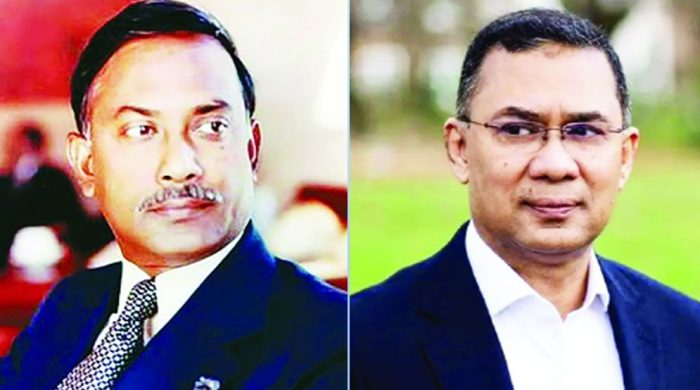
The simple, honest, and moderate lifestyle of the proclaimer of independence, Shaheed President Ziaur Rahman, was universally praised and exemplary. Despite being at the center of power, he led a very ordinary life and was revered by the common people for his personal integrity and dedication. His simple lifestyle, patriotism, and honesty established him as a ‘rare statesman’ among the masses. Current Prime Minister Tarique Rahman is now walking in his father’s footsteps. Following his victory in the 13th National Parliamentary Election, he has taken several exceptional initiatives under the slogan ‘Bangladesh First’, which are being praised across all quarters. As the saying goes, ‘Morning shows the day’. The beginning of the government formed under the leadership of the new Prime Minister Tarique Rahman is indicating exactly that. Many believe that a new dawn has begun in Bangladesh under his leadership.
Analysts note that while in power, Shaheed President Ziaur Rahman stayed away from a luxurious lifestyle, earning him the reputation of a ‘man of the soil’. His daily movements, dietary habits, and attire reflected a remarkable sense of moderation and discipline, which is still discussed in the country’s politics as a great example of preventing the abuse of power. He would directly listen to people’s problems and mingle with them, ensuring active public participation. A reflection of his father can be seen in the current Prime Minister, Tarique Rahman. His simple way of life has already cast a positive impact on the public mind.
In an interview published in the book ‘President Zia: Political Biography’ by renowned journalist Mahfuz Ullah, Tarique Rahman revealed, “My father loved to lead a simple life. We never wore expensive clothes or shoes. If anyone gave us anything, my father would not like it. He himself never accepted any gifts from anyone. That is why our relatives never dared to gift us anything. My parents and we two brothers used to eat very ordinary food and wear very simple clothes. If my father’s pants or shirts were too small or too big for him, a tailor would alter them to fit us.” Furthermore, a report in the Dainik Bangla on June 12, 1981, noted that Ziaur Rahman wore fine clothes only for formal and official occasions. However, within the four walls of his home, he was a very simple man, who even wore darned torn clothes. In an interview on July 23, 2012, ABM Musa remarked regarding Shaheed President Ziaur Rahman, “Once Zia asked me to have lunch with him at Bangabhaban. An utter surprise awaited me at the dining table. One cannot even imagine that a President’s menu could feature such ordinary food.”
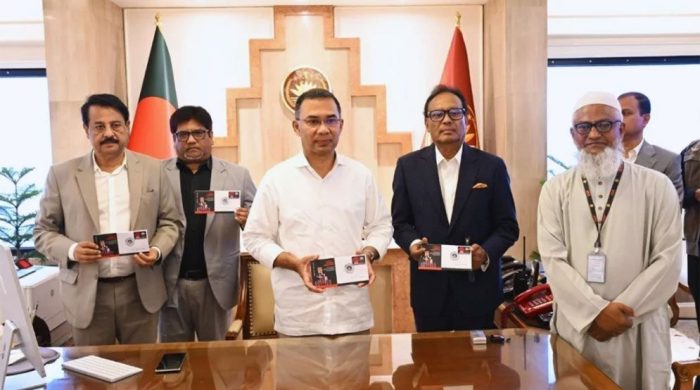
Reportedly, current Prime Minister Tarique Rahman prefers a simple lifestyle just like his father. After assuming office, he was seen attending his workspace at the Secretariat wearing a simple white shirt and trousers. By opting to use his personal vehicle, own driver, and self-purchased fuel instead of state-provided amenities, reducing protocols, and deciding to work on Saturdays, the Prime Minister is bringing innovation to state management and signaling a shift in political culture. These initiatives are being widely appreciated. The exceptional decisions the new Prime Minister has taken so far include reducing his motorcade from the traditional 13-14 vehicles down to just four, keeping public suffering in mind. The practice of police lining up on both sides of the road during the Prime Minister’s movement has also been abolished. He has decided not to use the national flag on his vehicle during regular commutes, reserving it solely for state events. To reduce public harassment, it has been decided to hold most cabinet meetings at the Secretariat. Additionally, to accelerate administrative work, Prime Minister Tarique Rahman has decided to keep offices open on Saturdays.
After taking his oath as Prime Minister, Tarique Rahman attended his office at the Secretariat for the second day on Thursday. A completely different picture was observed upon his arrival, with a vibrant work environment returning to the premises. He entered the Prime Minister’s Office in the Cabinet Building (new building) of the Secretariat at 9:15 AM. Being the first day of Ramadan, not all secretaries and officials had arrived yet. However, the Prime Minister had already reached his desk. Consequently, there was a sudden rush among the staff to reach their respective rooms. Many hurried to their superiors with files, and several secretaries who were stuck in nearby traffic jams abandoned their cars and rushed into the Secretariat on foot. Until now, the culture at the Secretariat was that secretaries or senior officials would arrive in a relaxed manner between 9:30 AM and 10:00 AM, after which work would slowly begin. But Tarique Rahman broke that old tradition on his second day. His early arrival created a completely different dynamic, restoring the pace of work through the promptness of all officials and employees. Amidst this, another exceptional scene was witnessed at noon. During the break for Zohr prayers, the Prime Minister himself offered his prayers, and everyone in his office joined in, an act that was highly praised throughout the Secretariat.
Following the electoral victory, Tarique Rahman took the oath as Prime Minister in an open space at the South Plaza of the Parliament Building on February 17, marking a new journey in Bangladeshi politics. Since independence, the rule has been that the Prime Minister must operate within strict state protocols, which typically means tight security, clearing roads with blaring sirens, and causing long waits and suffering for the common people. However, Tarique Rahman is refusing this traditional VVIP protocol because he does not want to cause public distress. From the very first day after his oath, he introduced the practice of moving around and mingling with the public without strict protocol barriers, resembling a scene from a democratic country in Europe or America. On the afternoon of February 18, while returning to the Secretariat after paying respects at the shrines of Shaheed Zia and Begum Khaleda Zia, the Prime Minister’s motorcade got stuck in a traffic jam at a busy intersection in the capital. Instead of clearing the streets instantly as per previous norms, the Prime Minister’s convoy waited at the signal just like any other vehicle. There was no excessive security activity, nor the pressure of horns or sirens. The Prime Minister rolled down his car window and waved at pedestrians. Many stopped in amazement, some recorded videos on their mobile phones, while others stepped forward to greet him. These scenes quickly spread on social media, sparking positive discussions. According to political analysts, these are not just behavioral changes but a message of a symbolic and political cultural shift, making it clear to the public that leadership is not above the people, but rather a part of them.
Professor Dr. Saiful Islam, former chairman of the Department of Theatre and Performance Studies at Dhaka University, told Jugantor that President Ziaur Rahman made outstanding contributions to politics, democracy, the economy, and women’s empowerment. He resurrected the multi-party system and essentially laid the foundation for a politics of tolerance and production in Bangladesh. For economic emancipation, he announced the ’19-point program’, which emphasized self-reliance, rural development, and decentralization. Dr. Islam noted that his canal digging and tree planting programs were highly commendable, and that Ziaur Rahman worked tirelessly, spending most of his time traveling to remote areas to preach the ‘politics of hope’ and urge all Bangladeshis to work harder. Current Prime Minister Tarique Rahman is seen following that exact path.
He further added that Prime Minister Tarique Rahman’s first address to the nation was extraordinary. In particular, his call for austerity addressed to all government and private officials, employees, and the general public was unparalleled. The decision that no MP elected from the BNP would import tax-free cars using government privileges or accept plot allotments is considered a very bold step. The new Prime Minister’s profound promise is that the state will be run following the ideal of ‘justice’ of the Holy Prophet. These decisions by the BNP parliamentary party serve as a clear reflection of that very ideal of justice.