
Trump Announces 15% Tariff: What Happens to Bangladesh’s Trade Agreement?

- Update Time : Sunday, February 22, 2026
- 39 Time View
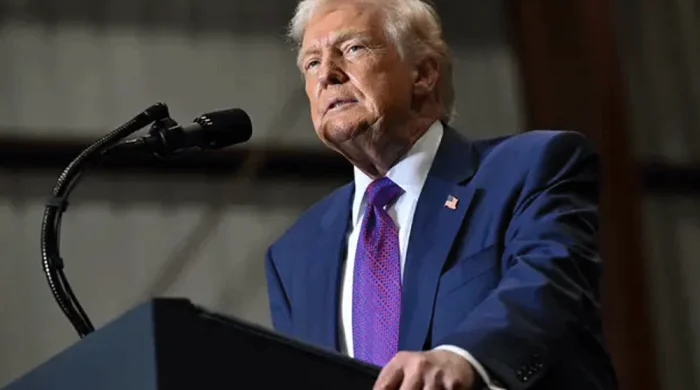
Questions have surfaced regarding the fate of the reciprocal trade agreement signed between Bangladesh and the United States on February 9—during the final days of the interim government. Under that agreement, the US retaliatory tariff on Bangladesh was set at 19%. However, less than two weeks later, the US Supreme Court on Friday declared the retaliatory tariffs imposed by President Donald Trump on various countries, including Bangladesh, illegal.
Expressing deep dissatisfaction with the Supreme Court’s ruling, President Trump announced a new 10% tariff on products from all countries by invoking the Trade Act of 1974 within hours of the verdict. On Saturday, he increased it by another 5%, bringing the total to 15%. This new tariff is scheduled to take effect on February 24.
Uncertainty Surrounding the February 9 Agreement
The situation has raised concerns about whether the existing reciprocal trade agreement will be nullified, though no official has provided a definitive answer yet. It is also unclear whether the new 15% rate will apply specifically to Bangladesh. Business leaders anticipate that Trump’s latest tariff declaration may also face legal challenges in US courts.
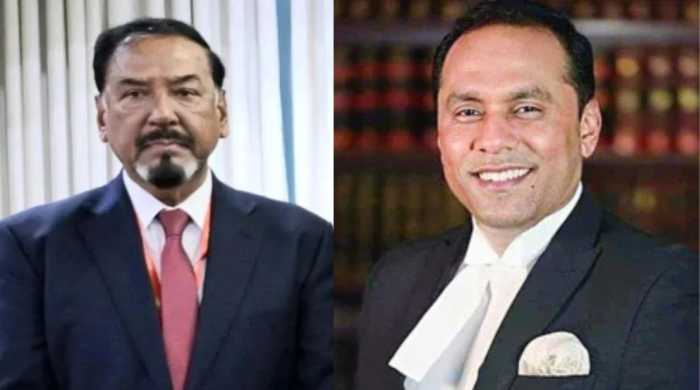
Commerce Secretary Mahbubur Rahman stated that the reciprocal trade agreement might be canceled, but the situation remains murky. “It will only become clear after February 24 what is going to happen,” he said. When asked why there was such a rush to sign the deal instead of leaving it for an elected government, the Secretary responded, “It had to be signed at that time. There was no ulterior motive. Those who are criticizing it are doing so without reading it; perhaps many don’t even have the capacity to understand it.”
Concerns Over National Interest
Former President of the Bangladesh Knitwear Manufacturers and Exporters Association (BKMEA), Fazlul Hoque, remarked, “We aren’t clear on the final outcome. However, if the February 9 agreement is automatically canceled, it would be for the best. If not, we need to rethink it because that deal contains many clauses that are detrimental to Bangladesh’s interests.”
A History of Shifting Tariffs
The trade tension dates back to April 2, 2025, when Donald Trump imposed retaliatory tariffs at various rates on products from 157 countries. After a three-month stay, the US began bilateral talks. On July 8, 2025, they reduced the rate for Bangladesh by 2%, bringing it to 35%. On August 2 of that year, Bangladesh reached a consensus at a 20% retaliatory tariff, in exchange for promising massive imports from the US.
Mostafa Abid Khan, a former member of the Bangladesh Trade and Tariff Commission, pointed out that the February 9 agreement has not yet taken effect as it requires ratification by the parliaments of both countries. “There is an opportunity to review the entire matter. Bangladesh must be more strategic. It would not be wise for the government to take a rigid stance right now,” he advised.