
Middle East’s Largest Refinery Shuts Down Following Drone Strike

- Update Time : Tuesday, March 10, 2026
- 54 Time View
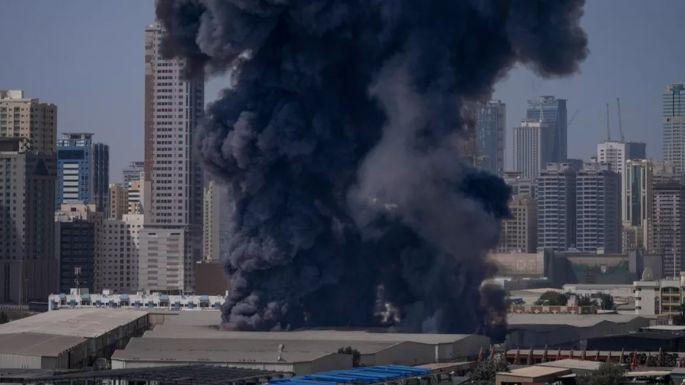
The Middle East’s largest oil refinery has suspended operations following a drone strike, as the deadly regional conflict enters its 11th day. The closure at the Ruwais Industrial Complex has sparked immediate concerns over global energy supply stability.
Fire at Ruwais Complex
Authorities in Abu Dhabi confirmed that a fire broke out at a facility within the industrial hub following the strike. While no injuries have been reported so far, officials have not yet confirmed if the refinery unit itself sustained a direct hit.
The Ruwais refinery is a global energy titan, boasting a processing capacity of approximately 922,000 barrels of crude oil and condensate per day.
Escalating Regional Conflict
The strike comes amid a massive escalation in hostilities across the region. On February 28, joint operations by Israel and the United States targeted Tehran and other Iranian cities, resulting in the deaths of Iran’s Supreme Leader Ali Khamenei, senior military officials, and several civilians.
In retaliation, Iran launched waves of missile and drone strikes aimed at Israeli and U.S. assets throughout the Middle East.
Defense Stats from the UAE Ministry of Defence:
-
Total Threats Detected: 262 ballistic missiles, 1,475 drones, and 8 cruise missiles since the start of Iranian counter-attacks.
-
Recent Interceptions: UAE air defense systems successfully intercepted 8 out of 9 ballistic missiles and 26 out of 35 drones targeting the country.
Human Cost and Foreign Casualties
The escalating tension has taken a heavy toll on the resident population. To date, six nationals from the UAE, Pakistan, Nepal, and Bangladesh have been killed. Additionally, 122 residents of various nationalities have sustained minor to moderate injuries during the attacks.
Why This Matters
The closure of a refinery of this magnitude could have a ripple effect on international oil prices. Analysts are closely watching the situation to see how long the shutdown persists and whether damage to the infrastructure is structural or superficial.